
The welding course
Become a welder in two semesters
Spend two-thirds of your time in the booth with a machine in your hands and one-third in the classroom. You'll finish able to read a blueprint, turn a CAD drawing into steel and lay a weld an inspector will pass.
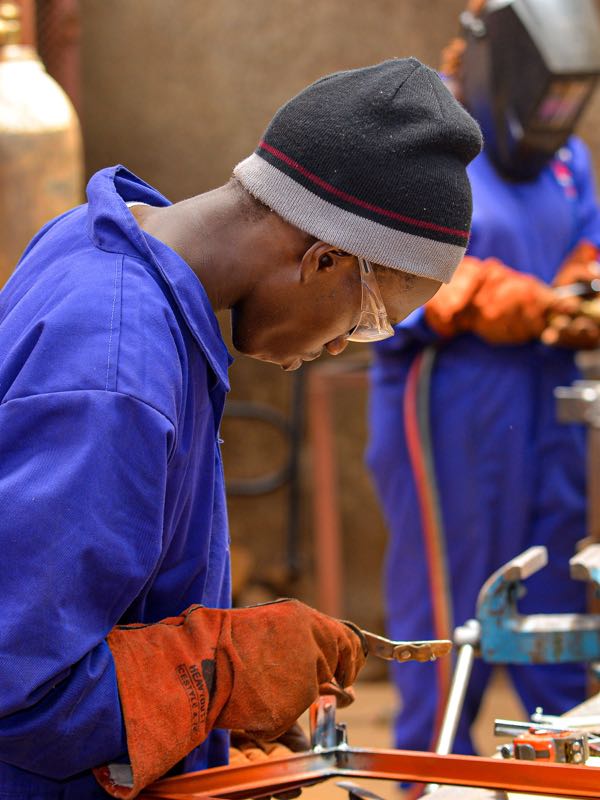
Who it's for
Is this course for you?
It's for you if…
- You'd rather be paid for what your hands can do than wait for an office job
- You can commit five days a week for under a year
- You are ready to learn. No welding experience is needed
It's not for you if…
- You only want a certificate to hang on a wall
- You don't want to work in the heat. You'll be in a booth, in a helmet, most of every day
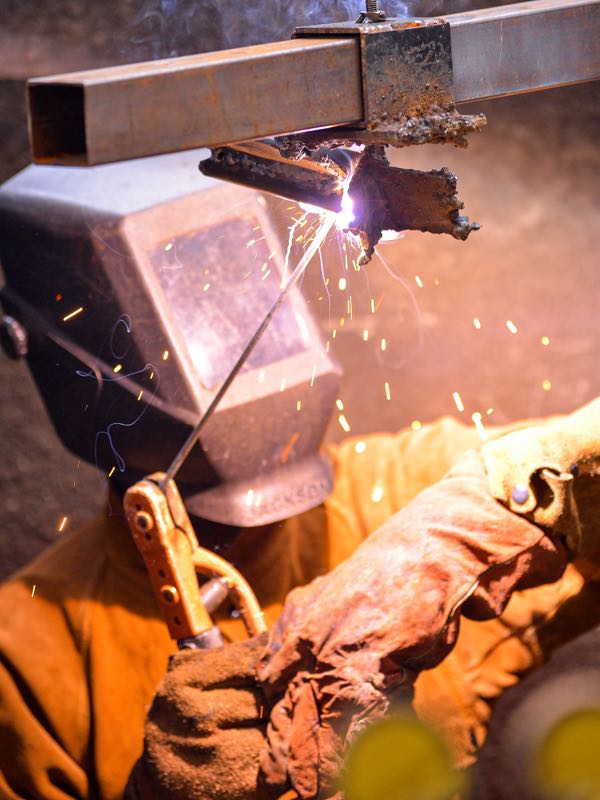
Semester one: arc welding fundamentals
You start with safety, then spend most of every day striking an arc and running beads until your hands know the work.
- Workshop safety and personal protective equipment
- Striking and controlling the arc
- Running beads in the flat position
- Running beads in the horizontal and vertical positions
- Fillet and butt joints on steel plate
By the end of semester one you can strike and hold a steady arc, run clean beads on plate, and work safely in a welding booth.
Semester two: fabrication and blueprint reading
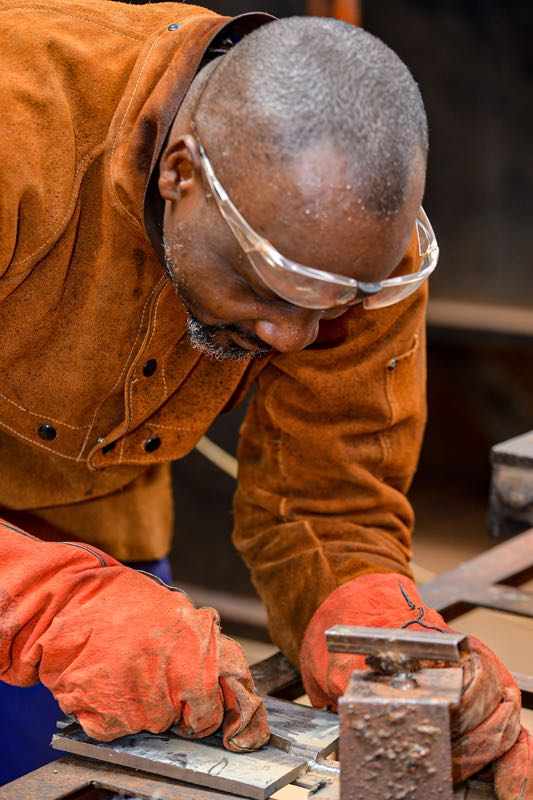
Now you build real things: reading drawings, cutting and fitting steel, and welding it into structures that have to hold.
- Reading engineering drawings
- Turning CAD drawings into cut and fitted steel
- Heavy steel construction
- Food-processing equipment
- Small-scale light steel production
By the end of semester two you can work across East Africa's metalworking industry: heavy steel construction, food-processing equipment and local production of light steel products.
What a training day looks like
Most of the day is spent welding, not listening.
| Time | What happens |
|---|---|
| 08:00 | Arrive, set up the workshop, check your kit |
| 08:30 | Classroom theory, taught as a group |
| 10:00 | Booth practice on your own machine |
| 12:30 | Break and lunch |
| 13:30 | Booth practice continues |
| 16:00 | Clean down and inspect the day's work |
| 16:30 | Thirty minutes on integrity, honesty and diligence |
That last half hour matters. Employers hire welders they can trust, and those habits are what keep you hired.
Our standards
Training employers recognise
Our curriculum comes from Lincoln Electric, a world leader in welding education, and every weld is judged against American Welding Society standards.
When a foreman asks where you trained, those two names tell him your weld will pass inspection. You practise on your own welding machine in your own booth, with the electrodes, steel and safety gear the work needs.


What you leave with
Proof of your skill that you can show any employer.
- A certificate in basic arc welding and metal fabrication
- Training completed to American Welding Society standards
- Hundreds of hours of hands-on booth time
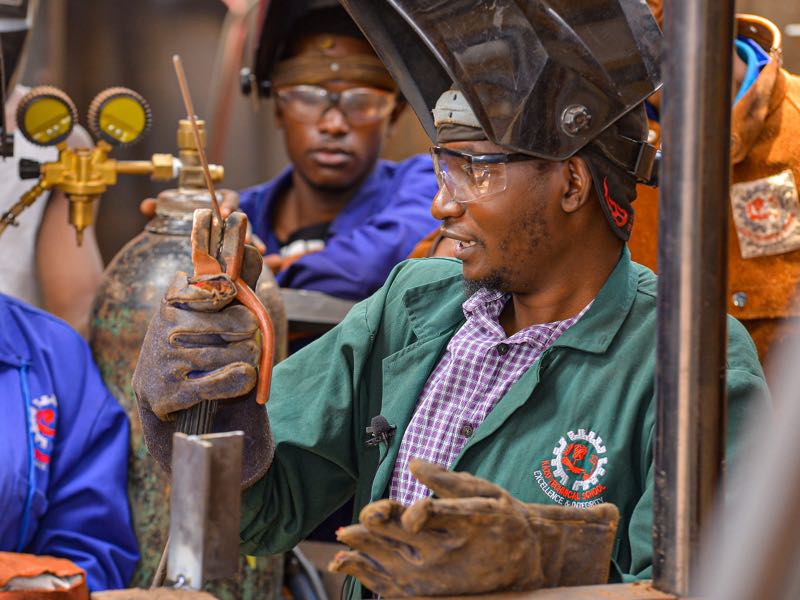
Taught by welders, in small classes
Your instructor is an experienced welder who works beside you in the booth, not at the front of a lecture hall.
With a low student-to-instructor ratio, someone is always watching your hands and correcting them before bad habits set in.
See it before you decide
Come on a Saturday morning. In two hours you'll strike your first arc under an instructor and take the piece home. It's free.